Why I made this

When you watch one of our logging videos on a television, the pictures move on before you have really looked at them. A video tells the story at the speed of speech.
The old records do not work that way. A photograph of a steam donkey rewards ten minutes of looking. A drawing in a 1913 logging textbook shows exactly where the cable ran.
Many of you asked to see the actual machines: the stump puller, the Howe truss, a map of the flumes. One of you put it plainly: "This would benefit greatly by illustration of the narrative." So I gathered the real photographs and drawings in one place, with the old records beside them.
Arthur Bennett
You asked for it. It's in the book.
Real requests left under our logging videos, quoted word for word, and where each one is answered.
"And not one picture of the "stump puller."!!!! Why?????"
Field File 7, page 72: the 1896 patent drawing of a capstan stump puller, every part numbered, plus a real tripod puller photographed in Washington.
"I wish the early part of this included a picture of a Howe Truss instead of just pictures of bridges."
Field File 8, page 82: the Historic American Engineering Record drawing of a Howe truss, with the chords, braces, counterbraces and iron rods pointed out one by one.
"Anyone got a map of these flumes?"
Page 11 and Field File 5: the Kings River flume traced from the mountains to Sanger, about 54 miles and almost 4,200 feet of drop, with an 1889 photograph of it being built.
"Why no picture of unit, no diagrams."
Every field file: one real photograph or drawing with a numbered "What to look for" key, so you can find each part yourself.
What you can explore
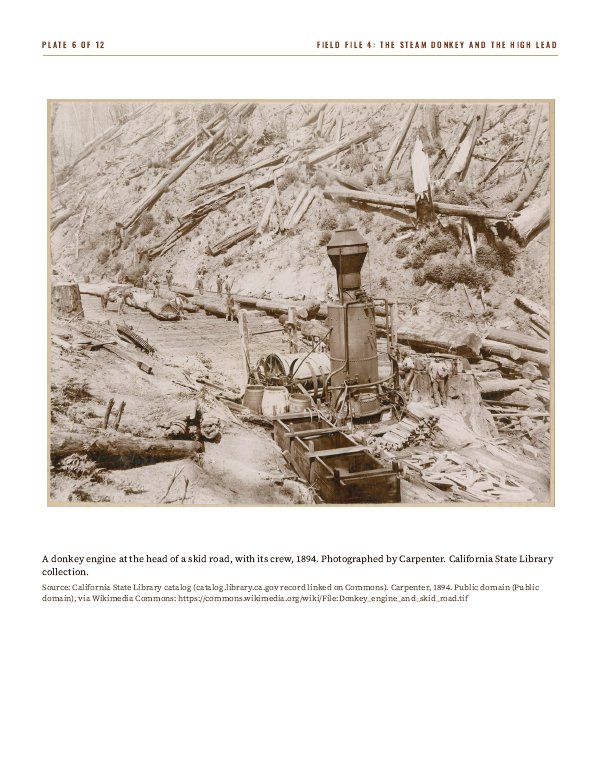
- See the actual machines: donkey engines, the Lombard log hauler, the big wheels, the flumes.
- Follow numbered "what to look for" notes around each main photograph.
- Read what the men who wrote about the work at the time actually said.
- Keep the hard numbers in one table per file, each tied to a source.
- Find the museums and sites where you can still see these things.
- Put names and places to the old photos in your own family's albums.
How the files were made
- Built from public-domain sources, chiefly Ralph Clement Bryant's Logging (1913), a forestry textbook written while this work was still being done.
- Only real period photographs and drawings. No AI pictures, no colorized or staged images.
- Every picture is captioned with what it shows, where and when, and the archive it came from.
- Facts, my own interpretation, and camp stories are kept apart and labelled.
What's inside
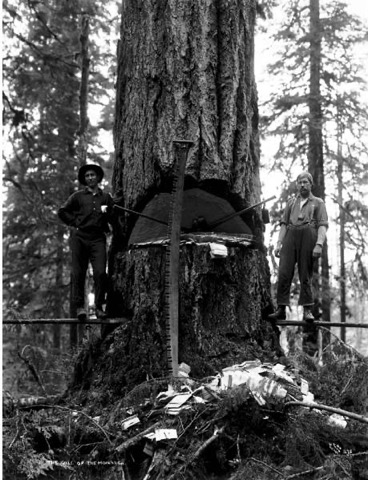 Field File 1Felling the Giants by Hand
Springboards, double-bitted axes, crosscut saws, undercuts and wedges in the Pacific Northwest and the redwoods, from about 1900 to the 1920s
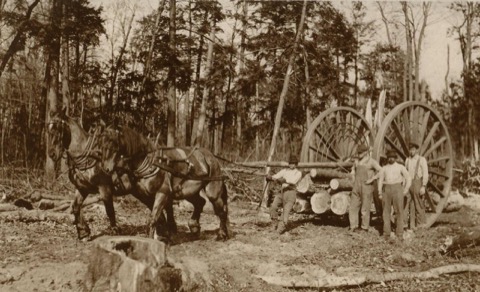 Field File 2Skid Roads, Ox Teams and Big Wheels
The greased log road of the Pacific Northwest and the high-wheeled log cart of Michigan, about 1850 to 1920
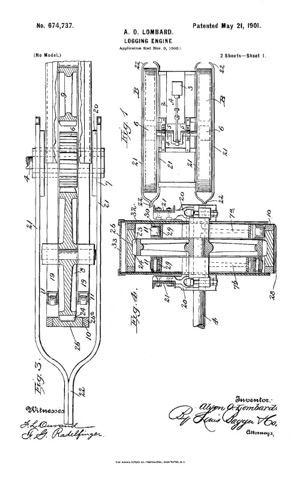 Field File 3The Winter Haul
The iced sleigh road, the water-tank sprinkler and the steam log hauler in the Maine woods and the Lake States, about 1885 to 1917
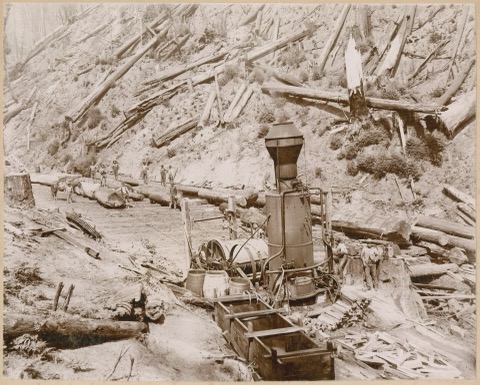 Field File 4The Steam Donkey and the High Lead
The donkey engine, the spar tree and the whistle punk in the Pacific Coast woods, 1881 to the 1930s
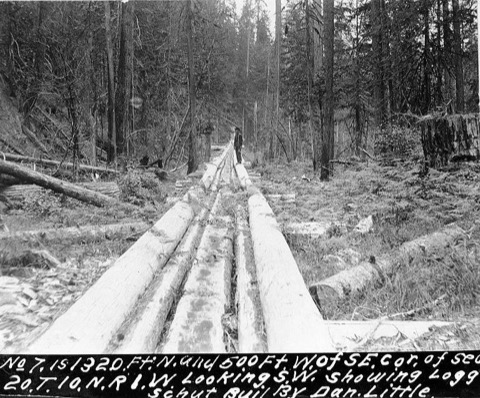 Field File 5Flumes and Log Chutes
Lumber flumes, log sluices and timber chutes in the American West and beyond, 1850s to 1920s
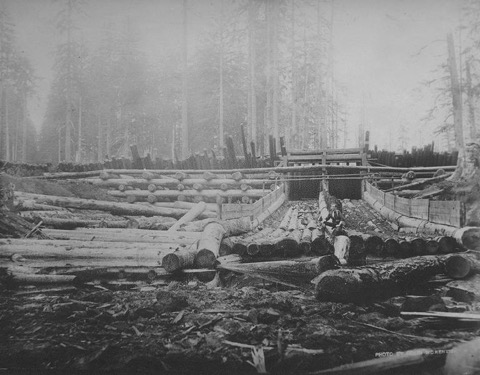 Field File 6River Drives and Log Jams
Spring drives, splash dams, peaveys, pike poles, bateaux, wanigans, booms and log marks on the rivers of the North, from the 1850s to the 1910s, with the St. Croix jam of 1886
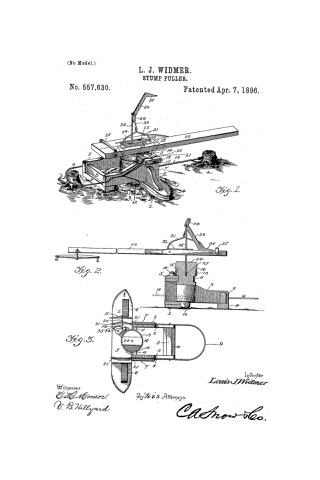 Field File 7Stump Pullers and the Cutover
Capstan and tripod stump pullers, stump blasting and the cutover farms of the Great Lakes States, about 1880 to 1930
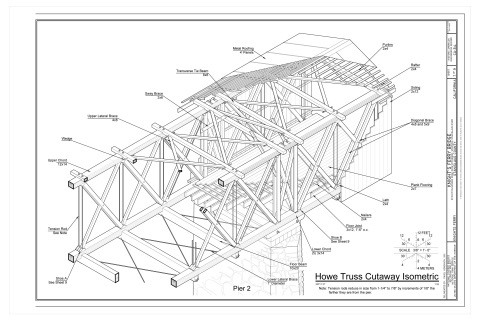 Field File 8Timber Trestles and the Howe Truss
Timber trestles and the Howe truss on America's logging and main-line railroads, 1840 to the 1920s
Plus: a timeline, a map of where it happened, a glossary, places to visit, keeping your family's logging photographs, and a viewing guide to the videos.
See the full table of contents
- A Note from Arthur, page 3
- How to Use These Files, page 4
- The Timber Age at a Glance, page 5
- Where It Happened, page 9
- Field File 1: Felling the Giants by Hand, page 12
- Field File 2: Skid Roads, Ox Teams and Big Wheels, page 21
- Field File 3: The Winter Haul, page 30
- Field File 4: The Steam Donkey and the High Lead, page 41
- Field File 5: Flumes and Log Chutes, page 51
- Field File 6: River Drives and Log Jams, page 61
- Field File 7: Stump Pullers and the Cutover, page 70
- Field File 8: Timber Trestles and the Howe Truss, page 80
- Words from the Woods, page 90
- Places to Visit Today, page 95
- Keeping Your Family's Logging Photographs, page 98
- Watching with the Files, page 100
- A Last Word from Arthur, page 102
- About This Book, page 103
Look inside
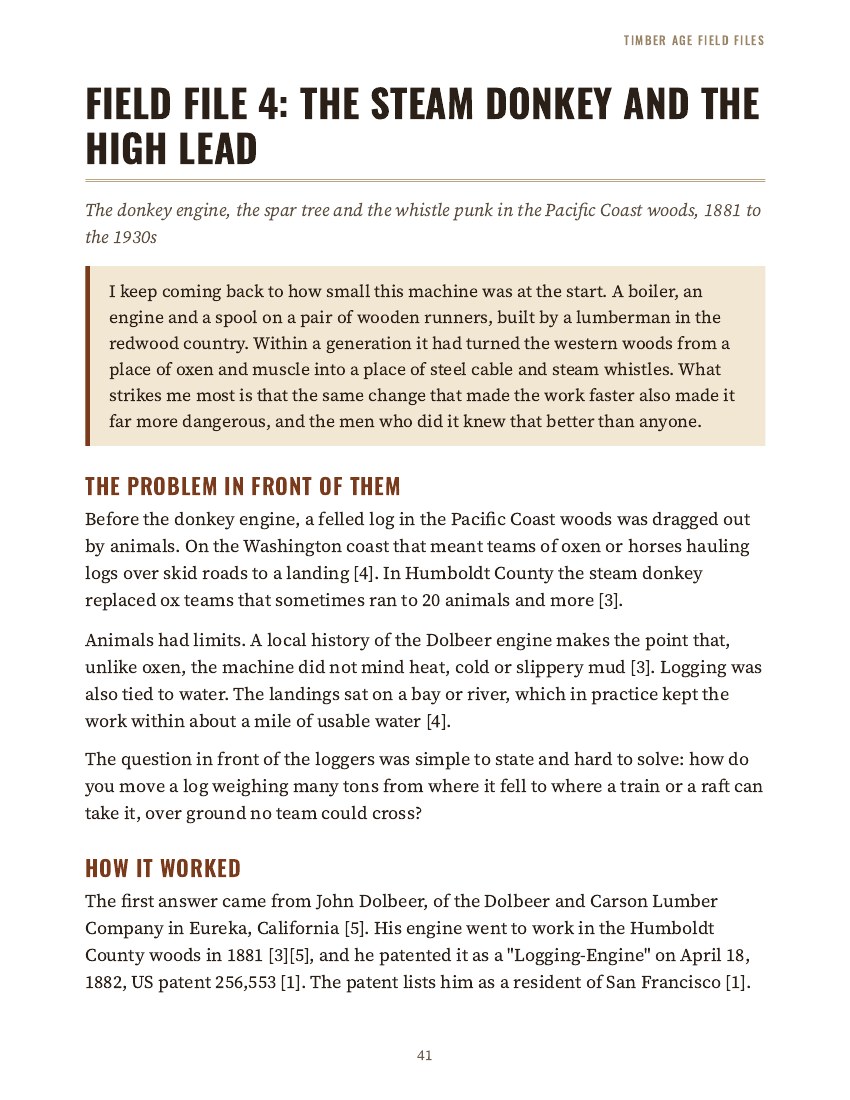
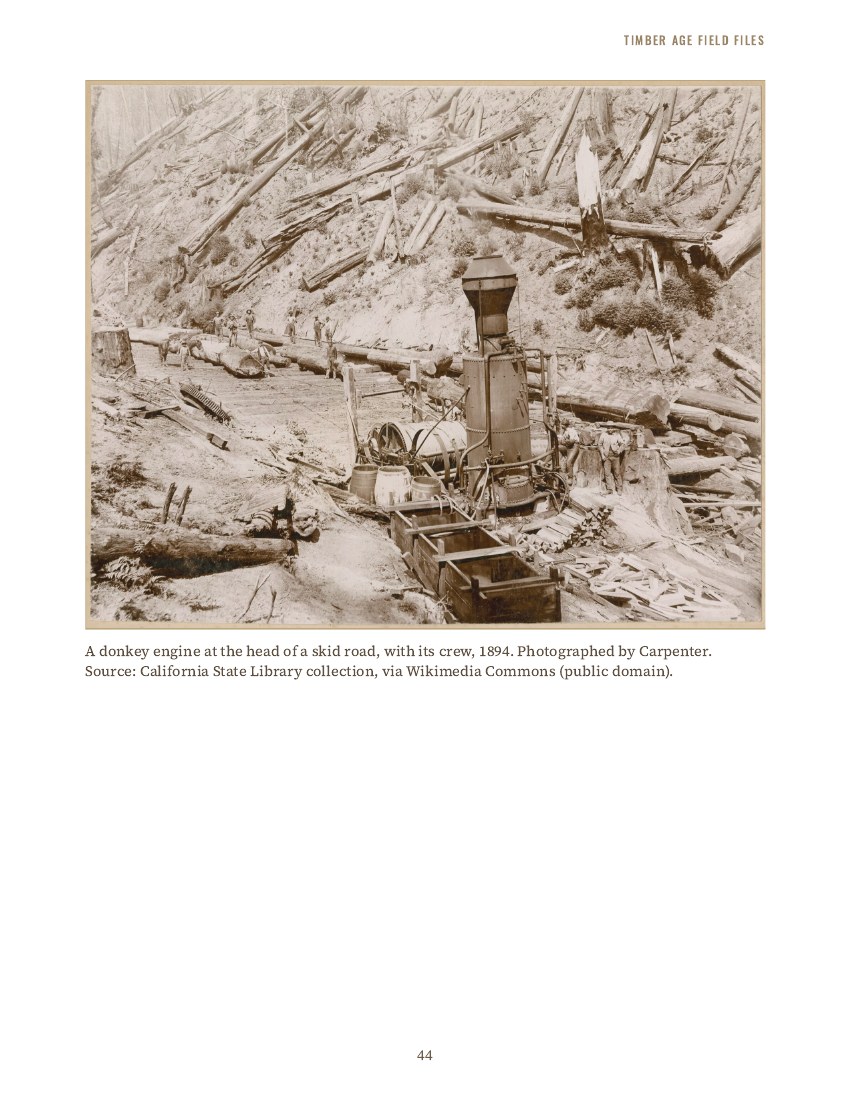
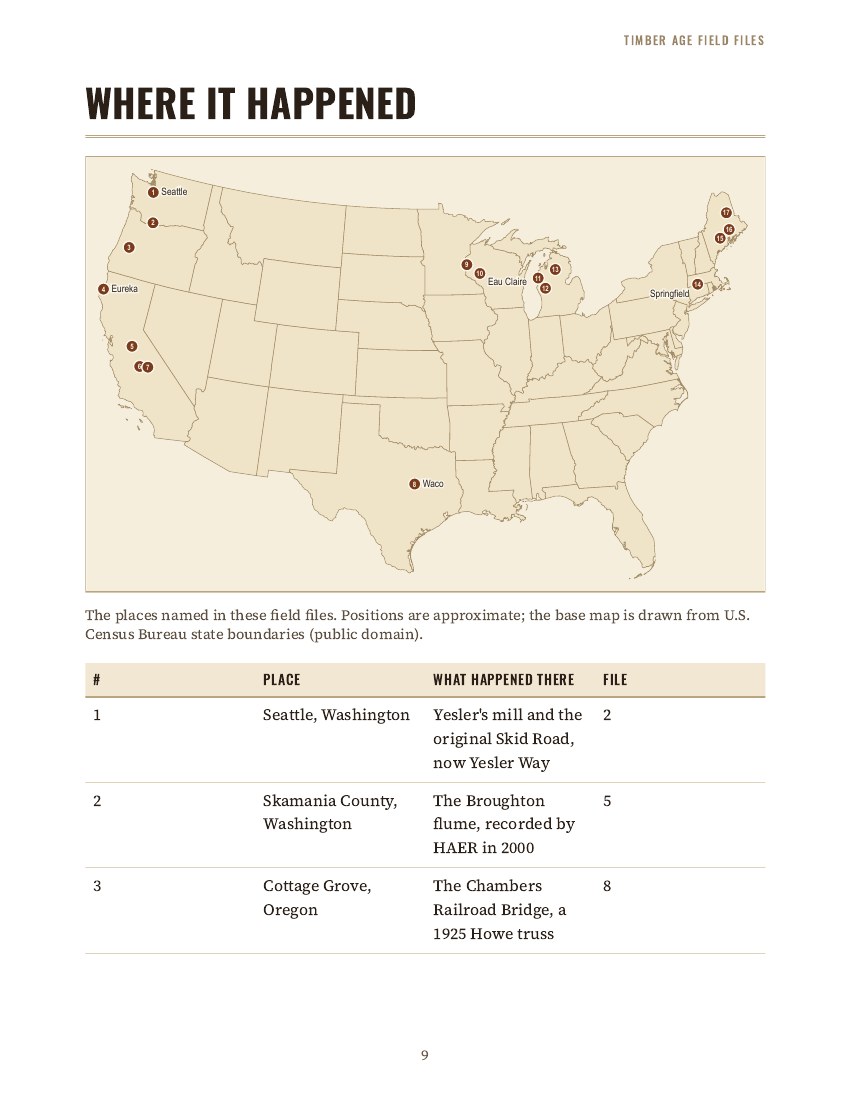
Read a free sample: the cover, the contents, my note and one complete field file.
Download the free sample (PDF)For you if
- you enjoy our logging videos and want to see the machines properly;
- you like old photo books and the details in them;
- someone in your family worked in the woods.
Probably not for you if
- you want modern forestry or tree-felling instruction;
- you want a printed hardcover (this is a PDF you can print);
- you are looking for never-before-seen archive discoveries. These are public records, carefully chosen and explained.
What viewers say about the logging videos
Real comments left on Global Old History videos, quoted word for word. They are about the videos, not reviews of this book.
"This should be in every elementary school in the United States. I would've loved to see this in a history class."
on "How America Built Wooden Bridges Across Canyons"
"Well researched and presented! This info is priceless for future generations. Thank you for putting it all together."
on "How America Built Wooden Bridges Across Canyons"
"I enjoy history and the untold stories of history because if we don't talk about it, it's gone forever."
on "How America Built 50-Mile Wooden Flumes Through Mountains"
"My great grandfather and grandfather logged and fished in the PNW. My grandmother cooked at a logging camp."
on "How America Built 50-Mile Wooden Flumes Through Mountains"
"Great old-school storytelling. It still holds up."
on "The Wooden Highways That Moved Logs Faster Than Trains"
"Amazing history. Amazing men that built it."
on "How America Built Wooden Bridges Across Canyons"
What readers say about the Field Files
Everything arrives the minute you pay. Read it on a phone, a tablet or a computer, or print it if you would rather hold paper.
Arthur Bennett's Timber Age Field Files
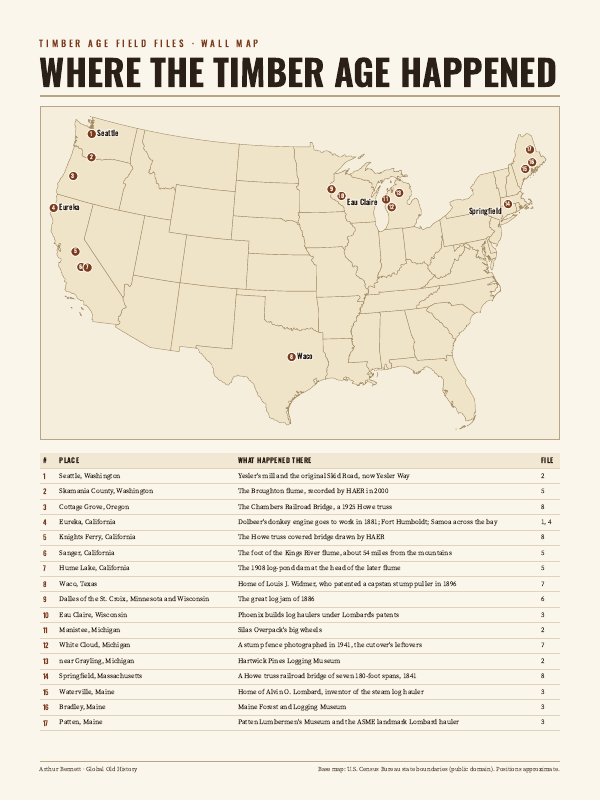

- Timber Age Field Files, Volume 1$19
103 pages. 8 field files of real period photographs, drawings and records, with Arthur's notes on what to look for.
- Timeline, map and places to visitINCLUDED
Where it all happened, when, and the museums where you can still see the machines.
- 31-day money-back guaranteeINCLUDED
Not what you hoped? Email us within 31 days for a full refund.
- Print Pack (optional)+$12
The wall map and timeline as two 18 by 24 inch posters, plus 12 framable photo plates. Tick the box at checkout if you want it.
Launch price until October 31
On November 1 the price goes up to $29.
SAVE $5 WITH YOUR COUPON
Get the Field Files· $19Safe & secure checkout
Your card details stay with Stripe
Payment is handled by Stripe, which encrypts your card and acts as the seller of record. We never see your card number.
31-day money-back guarantee
If the Field Files are not what you hoped, email us within 31 days and you get a full refund. No forms, no fuss.
Printable, made to keep
Large, easy-to-read type with every photograph captioned and sourced. Yours to keep, on any device or on paper.
Questions
What do I get, exactly?
One PDF file of 103 pages: 8 field files, a timeline, a map, a glossary, places to visit, a page on family photographs, a viewing guide and full sources.
How do I receive it?
Right after checkout you get a link to download the PDF.
Can I print it?
Yes. It is laid out for ordinary letter paper.
Will it work on my tablet or phone?
Yes. It opens in any PDF reader, including the ones built into phones, tablets and computers.
Aren't these photographs free online?
Yes. They are in the public domain, and the book says where each one lives. What you pay for is the finding, checking, dating, captioning and explaining, gathered in one place.
Who is Arthur Bennett?
Arthur Bennett is the digital presenter of Global Old History. The facts in the files come from the public records cited on every page, not from personal experience.
Will you try to sell me anything else?
At checkout you can tick one optional extra, the Wall Map and Timeline Posters for $7. After you pay, the next page has your download and one optional offer, the Photo Plate Collection. You can skip both, and your download is never held back.
What if I don't like it?
Email us within 31 days of buying and you get a full refund. No questions, no forms.
Is it the same as the videos?
No. The videos tell the stories. The files hold the pictures, drawings, records and numbers still, so you can study them.
The real machines of the logging era, up close.
Timber Age Field Files, Volume 1. Printable PDF, $19. 31-day money-back guarantee.
Get the Field Files